This post was originally published as a guest column in NAPE Magazine’s Spring 2026 Issue.
The hit TV show Landman, partially filmed on Texas Christian University’s campus in Fort Worth, may have sparked the idea, but our new “Land Management and Land Administration” course at TCU isn’t just a pop culture tie-in. It’s part of a broader and intentional push on our campus to reimagine energy education in response to rapid industry shifts and a growing workforce shortage.
Of course, land management is just a small part of the vast, varied and vital energy field, which includes everything from oil and natural gas to nuclear to renewables to cryptocurrency and the impacts on water. The country and the world rely on all these various forms of energy, and the energy sector powers virtually every aspect of life.
That sector is also constantly changing. It must remain on the cutting edge to adapt and respond to people’s needs and that requires mind power — a workforce that’s been trained to have the expertise in all aspects of the business and the ability to apply it in ever-new environments and circumstances. At TCU, we are working each day to support the workforce of today and tomorrow by introducing our students to key elements of the wide range of energy fields, providing experiential learning opportunities and teaching them from the ground up the crucial skills they need to lead this sector successfully into the future.
EDUCATING THE TOP TALENT NEEDED
Today, the energy sector faces many challenges: tariffs, changing regulations, geopolitical volatility and more. One of the most critical is training the future energy workforce. Young people don’t often think about energy as a possible career, and colleges and universities aren’t offering enough courses in important, relevant disciplines to show them the possibilities that exist.
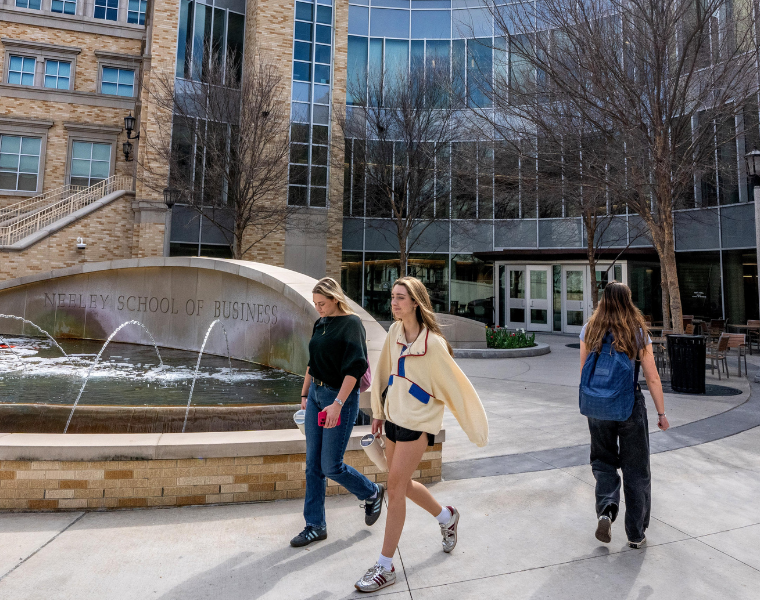
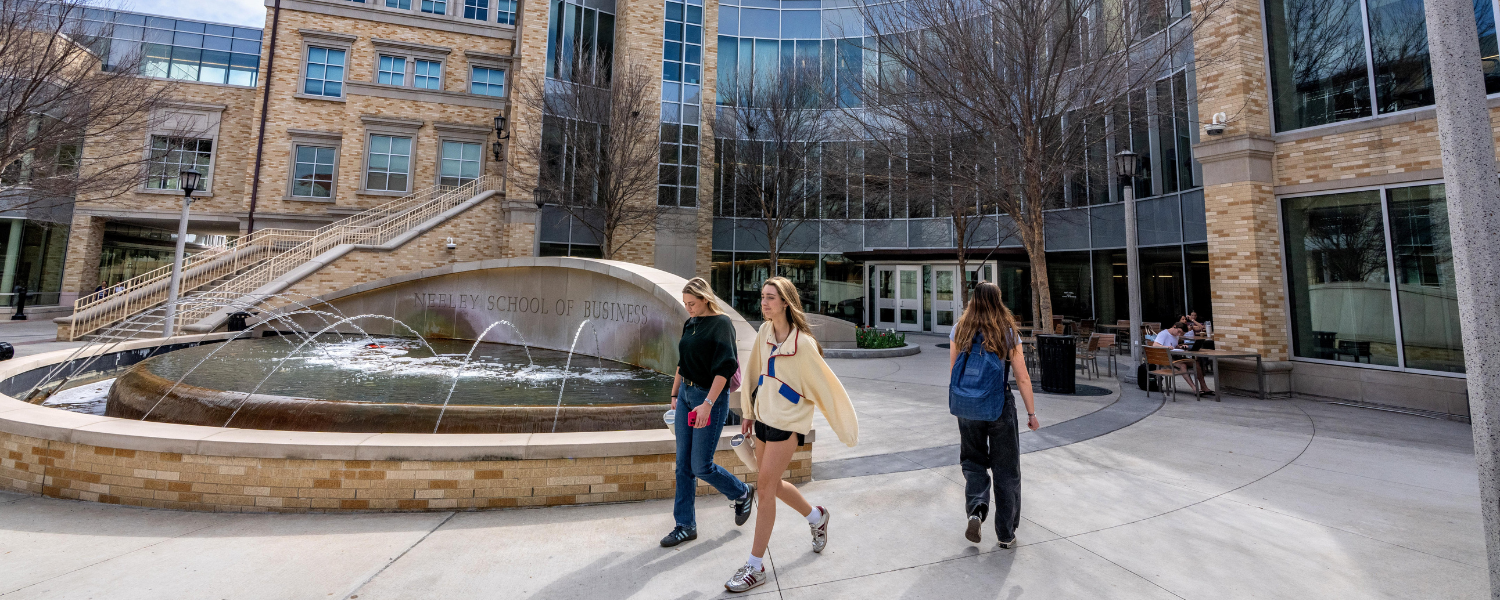
At TCU, we are meeting the moment by spotlighting the many aspects of the sector to students. Leading the way is our Ralph Lowe Energy Institute, housed in the Neeley School of Business — where I previously served as dean and leaned into our graduate programs for the energy business. The institute’s executive director, Nikki Morris, is committed to developing future leaders for the energy sector through innovative programs, hands-on experience and internships with industry partners.
What, in particular, sets TCU apart in its educational and community offerings?
1. We are nimble.
We’re able to respond and adapt to rapidly emerging new trends in the field and general environment and to create classes like the Landman course within just a few weeks. The seminar prepares students for certification and careers across oil, gas and energy management systems, while offering hands-on education out in the field. We can move at the speed of business and society and thus address the opportunities and challenges of the day.
Last summer, for instance, a corporation brought a challenge to the energy institute that evolved into a project in which, in just a few months, business undergraduate students reimagined a 6,000-acre oil and gas site in Midland. They developed a strategic plan to explore ways to cut operating costs, maximize existing legacy wells and create opportunities for cleaner, more sustainable energy.
At TCU, we see higher education as an active partner in the future of energy, not a distant observer. As the institute’s Morris has said, “Our responsibility is to prepare graduates who understand the full value chain and can collaborate across disciplines to develop real solutions. By working directly with industry and aligning our research with practical application, we are helping develop leaders who can move projects forward responsibly, competitively and sustainably in a rapidly changing energy economy.”
2. We are taking an interdisciplinary and comprehensive approach.
Today and into the future, success in the energy sector will increasingly require interdisciplinary cooperation. You can know everything about how to drill a well, but if you can’t get the rights to the land, if you aren’t aware of environmental concerns or regulatory challenges, or if you can’t get the product to market in a financially sustainable way, you won’t be able to lead the industry forward.
We encourage students from all sorts of majors — economics, geology, political science, finance, accounting and others — to consider jobs in energy. Frequently, students simply don’t know about all the career opportunities in the sector, so we are exposing them to the many possible occupations they can have — energy analyst, project manager, corporate affairs, business development and numerous others.
An example is Ellie Schreck, a senior majoring in finance and accounting, who came to TCU with little knowledge of the energy sector but was interested in learning more.
“I was unsure where or how to begin. Through the Ralph Lowe Energy Institute, I gained both foundational knowledge and clear direction,” she said. “The institute connected me with an energy-focused internship as well as a full-time job opportunity postgraduation, playing a critical role in turning my initial curiosity about energy into tangible career opportunities.”
In fact, our focus goes well beyond the energy sector itself, as evidenced by the centers and institutes across our campus that extend the classroom experience. A sampling of those initiatives includes the Center for Real Estate, the Institute for Entrepreneurship and Innovation, the Center for Environmental Studies and the Ranch Management Program. We aim to train students to provide comprehensive solutions to the challenges facing the broadest spectrum of industries, given their dependence on energy and natural resources in ways that ultimately impact the nation’s entire economy and global competitiveness.
What’s more, given the continuing change confronting the energy sector, we’re also preparing students with the skill sets and mindsets to reinvent themselves at each chapter of their career and bring the most value to their employers. Our broad liberal arts education teaches them how to reeducate themselves as needed, think critically, and create strong relationships and work effectively with everyone they encounter on the job.
3. We are building bridges between academia and industry.
We are partnership-focused and collaborate on a variety of tangible projects with local, national and global energy organizations. For example, we are attracting industry partners through our ongoing internship programs where students, from freshmen to seniors, work on projects solving the various challenges those partners are grappling with. After listening to what each organization needs, we pair students with them just as we would for a summer internship like the one in Midland, but we offer these opportunities throughout the year. Such practical experience in the fields of their choice gives students not only a stronger career narrative but also greater confidence that they can continue to contribute to and succeed in the energy sector. We are producing graduates who will be able to propel their careers just as they propel the key objectives and growth of the organizations for which they work.
The Ralph Lowe Energy Institute also brings industry leaders to campus as executives in residence, like Monte Dobson, a retired senior executive with XOM. Another example is the recent TCU Global Energy Symposium that featured top executives from Diamondback Energy Inc. and ERCOT. The annual symposium is a premier event that connects the next generation of energy leaders to key developments across the energy value chain and addresses topics like natural gas power generation, water-tech integration for data centers, grid and infrastructure resilience, and advanced nuclear technologies.
In fact, we’ve created a centralized, top-level office of partnerships so we can provide a one-stop shop for organizations interested in working with us. We want to make it as easy as possible for people within and beyond the community to obtain the support and solutions they need as quickly as possible from not only our students but also our faculty and staff members or alumni.
4. We are providing students hands-on experiences in the field, both in the U.S. and internationally.
We get students away from their desks and out of the classroom and take them on monthly trips to energy industry data centers, oil rigs and other locations in Fort Worth and throughout the state. Students work on-site where they can see energy happening in real space and time and get involved firsthand in various aspects of the sector.
Our students also collaborate with international partners to help develop practical energy solutions. Right now, we are partnering with the Brazilian National Agency of Petroleum, Natural Gas and Biofuels, the country’s federal regulator for the oil, gas and biofuel sectors that sets rules, grants licenses, inspects operations, collects royalties and promotes national energy policy to ensure supply and protect consumers. Our students are working with the agency to create a hydrogen and carbon capture road map from 2025 to 2050 that they will present to its leadership this spring.
In all their projects, we get students asking and answering questions like: How do we get from a specific energy source to the end consumer? How do we leverage what historically has been waste and turn that into a form of energy and a value-add for the community?
Conor Freeman, who earned his bachelor’s degree with a focus on finance in 2016 and returned to TCU last year to pursue an Energy MBA, is just one example of those students. He has gained professional experience and has now come back to enhance his expertise and marketability.
“I came into the energy program with a commercial LNG background and quickly expanded my focus from asset execution to the capital markets and strategic decisions that drive long-term value in energy,” Freeman told us. “Early engagement with alumni and industry leaders broadened my network and positioned me at the intersection of energy and investment. As both a Neeley undergraduate and MBA student, it’s clear to me that the strength of TCU has always been its network.”
BUILDING A COMMUNITY OF PROGRESS
Artificial intelligence is quickly transforming the energy sector, as it is with so many other industries. So we are training students how to use it, be it to capture and preserve legacy data, identify novel resources or perform forward-thinking market analyses through predictive analytics. Fortunately, our location in Fort Worth gives us access to a wealth of expertise, as more major data centers and technological innovators move into the community that help keep us on the leading edge of AI and other emerging technologies.
Those within our community are also playing a major role in helping us create the pipeline of future educated and talented leaders that our sector crucially needs. A great example is Mary Ralph Lowe, who made a significant philanthropic investment to help endow and name the Ralph Lowe Energy Institute in tribute to her late father, a successful oilman who was elected to the Petroleum Museum Hall of Fame in 1973. She and others like her give back by making training economically viable for students who can significantly contribute to the sector and its progress. They understand the invaluable returns such investments in mind power will ultimately have for energy companies as well as, ultimately, people and communities around the globe — and that the single best investment one could make to the energy industry is to help prepare its skilled future employees.
Without a doubt, our nation, indeed the world, cannot flourish without a strong and vital energy sector, one that gives people the chance to rise from poverty and to live productive lives — and that plays a crucial role in expanding economies locally, nationally and globally. To ensure our sector’s future growth and success, our institution will continue to collaborate with business and community partners to be a model for how universities can energize and prepare the best workforce possible.
Whether it’s an entry-level employee who can add value the day after graduation, an up-and-coming and more seasoned professional or a C-suite executive, TCU will stand ready to provide them. We are preparing boundary spanners and collaborators who can bring other people together in a constructive way with credibility and the most current skills. We are preparing them to solve the toughest challenges of our time and to lead in this vital industry, for now and for tomorrow.